
The Nike Air Max 90 arrived upon the UK shores as a running shoe, but has spent the past 35 years being anything but. Make no mistake, the Air Max 90 has been a huge success, moving from marathon BPs to acid house jungle and breakbeats, few trainers have travelled through UK culture quite like it.
Few shoes that can stand toe-to-toe with the Air Max 90, a silhouette that has been laced differently across county lines, yet one that London proudly claims as its own, and a trainer that has planted itself deep within the footwear DNA of the UK.


London's Notting Hill Carnival 1990 Photographed by Peter Marshall

Lily Allen 2006 by Debbie Bragg via alamy
Born to Run
In 1990, Nike released the Air Max III, its third version of a running shoe using its patented Air technology. When the shoe first launched, it retailed for £59.99 (£153.00 in 2026) and was designed for road runners. However, had you asked London retailers at the time, they’d have told you that only 25% were going to serious runners and the rest were going to what people were labelling as “streetwise kids”.
Almost straight away, the Air Max III, as it was known at the time, was gaining attention from a UK audience that the Swoosh hadn’t planned for.

De La Raza Crew in Whitecity London by Debbie Bragg via alamy
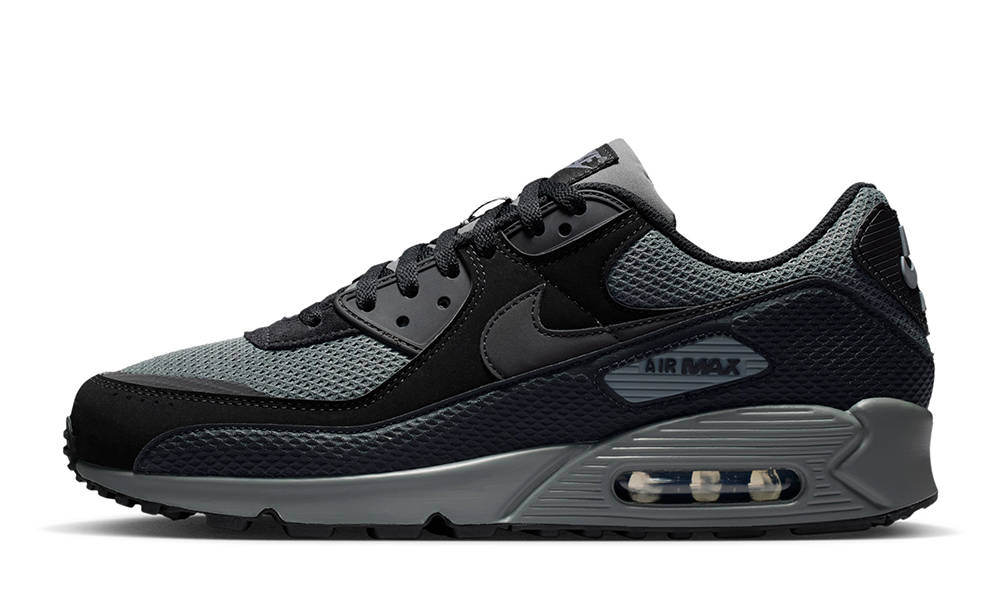

From Running to Raving
Head back into the photo archives and you’ll find the Nike Air Max 90 pacing its way through the London Marathon. Among the thousands of the running mad were marathon veterans stretching in a pair of “Laser Blue” Air Max 90s at Greenwich Park, just look close enough and you’ll find this iconic Air Max was not only present, but busy clocking in the miles.

World B Body Championships in Brixton - Debbie Bragg via alamy
The Air Max 90 quickly escaped its original sporting purpose, finding a new home on dancefloors, at raves and within UK youth culture.
At the same time, the Air Max 90 was becoming familiar with the annual celebrations at Notting Hill Carnival, as well as rave scene favourites such as The Hacienda in Manchester and the Fantazia circuit. People had figured out that if they could handle those crazy running folk, then they would keep up just as well when partying. Although the best part was that they looked great doing so.

"Laser Blue" AM90 at London Marathon 1991

Wiley photographed by Debbie Bragg via alamy
Making the Air Max 90 Your Own
The 2000s marked the beginning of a new century, and 10 years since the Air Max 90 had first arrived. During this era, the legacy of Thatcherism had helped reinforce ideas of personal aspiration and individualism, while a fragmented youth culture and the Internet’s early adoption of the digital self, meant that people wanted to both fit in, but equally wanted to feel different.
Nike’s Air Max 90 was a perfect example of this social dilemma in the UK, a trainer that everyone owned, yet more importantly, one that people wanted to make their own. For some, that meant lacing only the bottom three eyestays. A youthful Dizzee Rascal would lace his Air Max 90s as such, performing on stage with his shoe’s tongue popping from out the cuff of his jeans. What good was lockdown when you were one of the UK’s fastest growing artists?

HOODZUP Nottingham Crew 2009
Wiley, aka the Godfather of grime, took equal pride in lacing up his Air Max 90s in his own way. Using the star cross lacing system, Wiley’s Air Max would end up with two giant bows hanging down either side of the shoe. It was an exaggerated style, a far cry from the typical lacing, or even the bar lacing that had plagued the footwear shelves of the ‘90s. Here you had two artists from London’s E3, but both took the time to lace the Air Max 90s their own way.

Runners stretching for London Marathon 1991 - Richard Baker via alamy
The Midlands bassline scene also had its own language when it came to the Air Max 90. Late 2000s Hoodz Up and DJ Pantha music videos would feature MCs wearing black Air Max 90s with neon laces swapped in, matching the bright Swoosh along the sidewall. Even mismatching the neon lace colour accents was okay, as long as you weren’t doing too much.
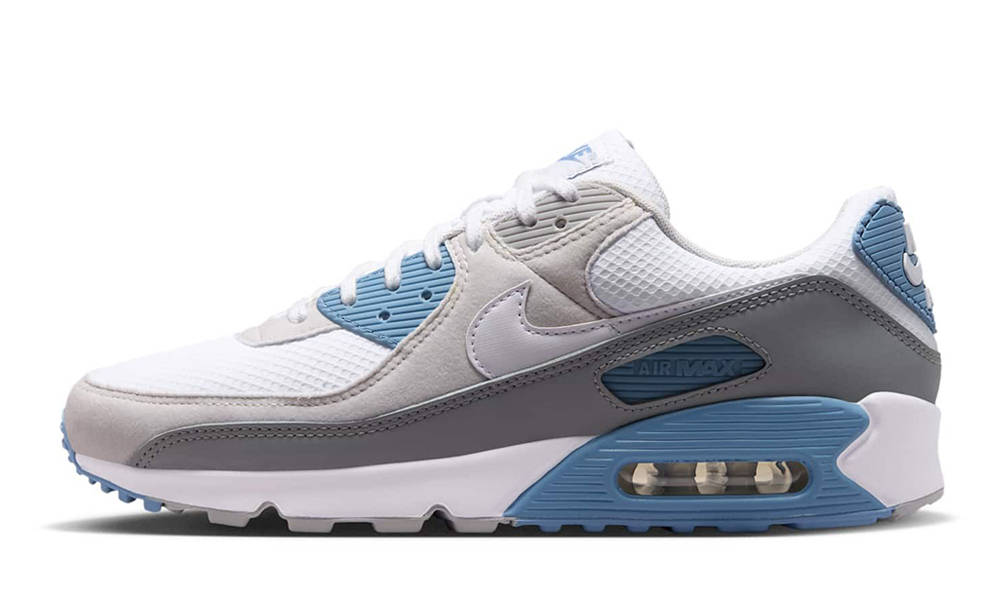

The Air Max 90 was a trainer that everyone owned, but more importantly one that people wanted to make their own.
Of course, Nike acknowledged this desire to make your shoes feel more personal by creating the Nike iD (now known as Nike By You) programme in 1999. However in 2007, the Swoosh pushed its iD feature following an in-store activation at NikeTown London. The grime scene has a number of references to the iD programme throughout its bars, or as Tinchy Stryder once called them, “the trainers with your name on”. For those who couldn’t afford or didn’t have the patience to create their own Nike iD (Nike By You), lacing up your Air Max 90s your own way was the next best thing.

Dizzee Rascal 2004

Dizzee Rascal peforming at T4 on the beach 2010
What Air Max Meant to Grime
Despite all the different ways that people were wearing the Air Max 90, the trainer was a form of common ground within UK subcultures. Grime, influenced by Sound System and jungle before it, had adopted the AM90 as part of its uniform. As Wiley once put it, "Man's been bussin' Air Max from longtime", cementing Nike’s position within the genre he’d so tirelessly worked to create.
Skepta solidified the Air Max 90’s status when he said in a 2008 interview, “the Nike Air Max 90s go with anything, shorts, jeans, trousers, you name it.” Wholly accepted by a then-niche UK subculture, the trainer still didn’t feel exclusive to grime. That was until Nike gave one of grime’s biggest stars, Dizzee Rascal, a chance to create his own exclusive Air Max 90. Finally, there was a trainer that Grime could call its own.

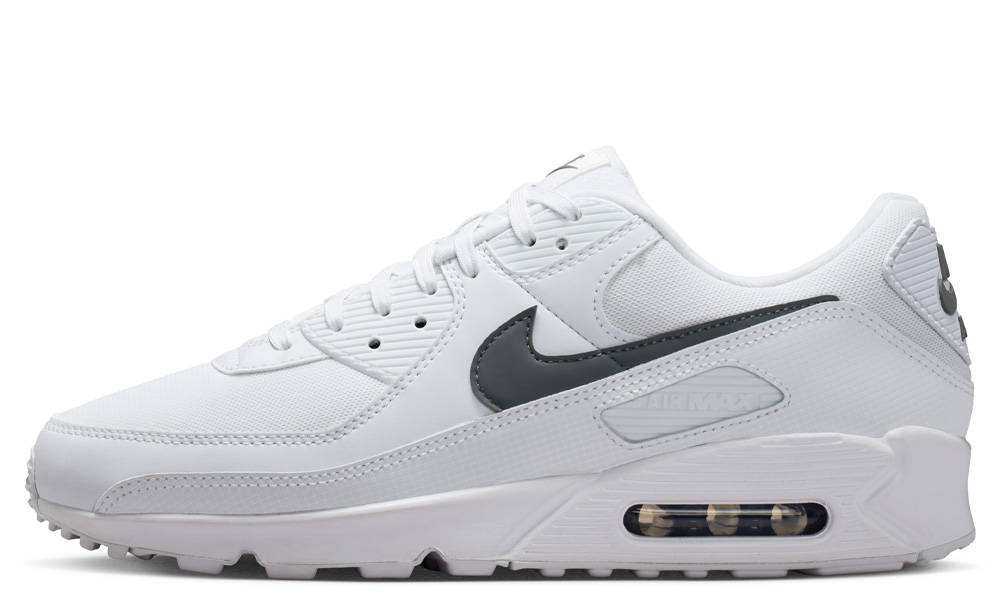

Dizzee Gets the Keys
Dizzee Rascal’s relationship with Nike began long before he dropped his exclusive Tongue N’ Cheek Air Max 90. From getting second-hand Nikes as a kid in East London, to wearing Air Max BWs on the cover of Boy in da Corner, to finally being asked to create his own Air Max 90, the collaboration was the culmination of a relationship with Nike that had followed him from childhood into stardom.
“The Air Max 90 is pretty much the street shoe, innit? It’s quite sporty, but when you get the right colours you can wear it with anything”, said Dizzee during the promotional run for his Tongue N’ Cheek project (2009).

via Tim & Barry TV
The Air Max 90 is pretty much the street shoe, innit? It’s quite sporty, but when you get the right colours you can wear it with anything.

via @morprime

via Footpatrol
Aged 25, Dizzee's relationship with Nike reached its most public expression yet, dropping the Dizzee Rascal x Ben Drury x Nike Air Max 90 ‘Tongue N’ Cheek’. Nike was giving the boy who grew up in Bow the opportunity to create his own version of ‘the street shoe’ - an unimaginable feat for the 14-year-old Dizzee who started MCing on pirate radio aged 14. The AM90 reportedly limited to 200 pairs at the Nike 1948 store in Shoreditch, a location only down the road from the East London borough that had informed so much of Dizzee's life and music.

via @morprime
Each facet of the release was covered by an authentic UK voice. Ben Drury, the UK designer behind Dizzee's Boy in the Corner, remained by his side for the AM90, later creating the lesser-known Air Max 90 Current “Silent Listener” as part of the wider project. Tim & Barry, who had documented grime since its formative years, handled the video campaign. Nike hadn't assembled a cast around Dizzee - the creative network had already existed, producing what is arguably the UK’s most important Air Max collaboration.
The moment was obviously Dizzee's, but it represented something bigger. The Air Max 90 had spent years being embraced by UK subcultures; now Nike was handing the silhouette back to the people who had helped give it that meaning.

via Roundel x Nike 2013
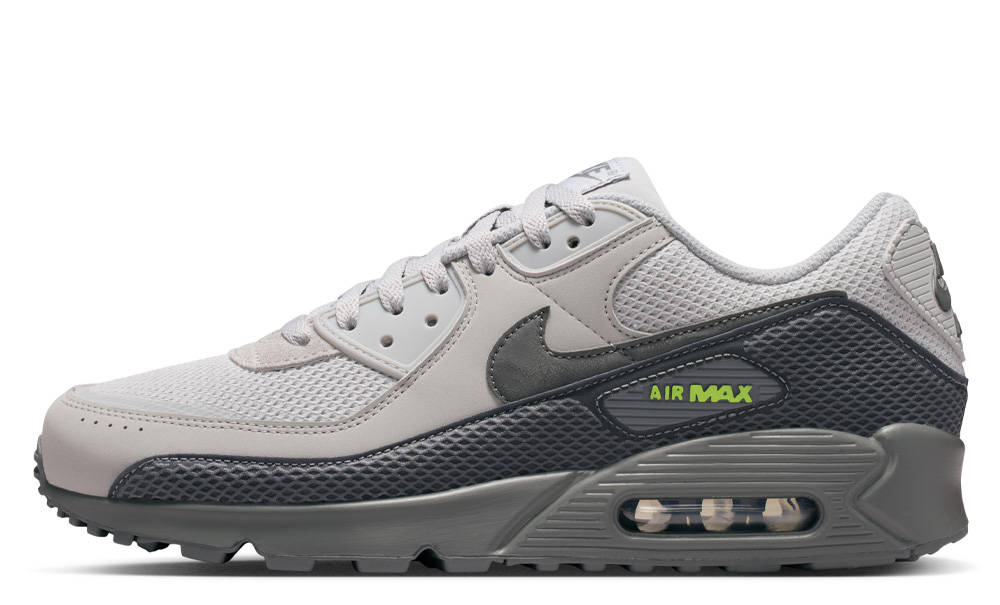

£134.99
£94.49

Making the Air Max 90 Local
Retailers also had a huge part to play in strengthening the UK’s connection to the Air Max 90, especially in the 2000s before shoe collaborations were the norm. JD had a strong hold on exclusive colourways, the Air Max 90 “Spruce Lime” retro in 2008 being a perfect example of that.
In 2012, JD would also release a limited Air Max 90 “London”, a version of the OG ‘Infrared’ with a Tube-map-inspired graphic beneath its translucent outsole. Here, similar to Dizzee’s reference with his reference to the Docklands Light Railway (DLR) on his Air Max 180s in 2005, the Air Max 90 was being tied to London’s public transport systems.

via @Roundel

via @runneralerts
The following year in 2013, Roundel celebrated the Underground’s 150th anniversary with its Nike collaboration. The Roundel pack featured an Air Max 90 that was decorated in the District Line’s moquette, a seat cushion pattern that commuters would have encountered in the 1980s. The pairing felt appropriate. Both had become fixtures of everyday London life, carrying different generations and different communities through the same city.
But London wasn't the only UK city finding itself represented through the Air Max 90. In 2006, the arrival of The Clerk’s Pack handed the design process to staff at size?’s Brighton store for one of its three entries. Inspired by the “Sun, sea, surf and beach huts”, the Air Max 90 “Brighton” was a beautiful snapshot of life along the south coast of England. Now recognised as a UK cult classic, the Brighton showed that there didn't need to be one UK interpretation of the Air Max 90 different places could make the same silhouette their own.

via size? blog

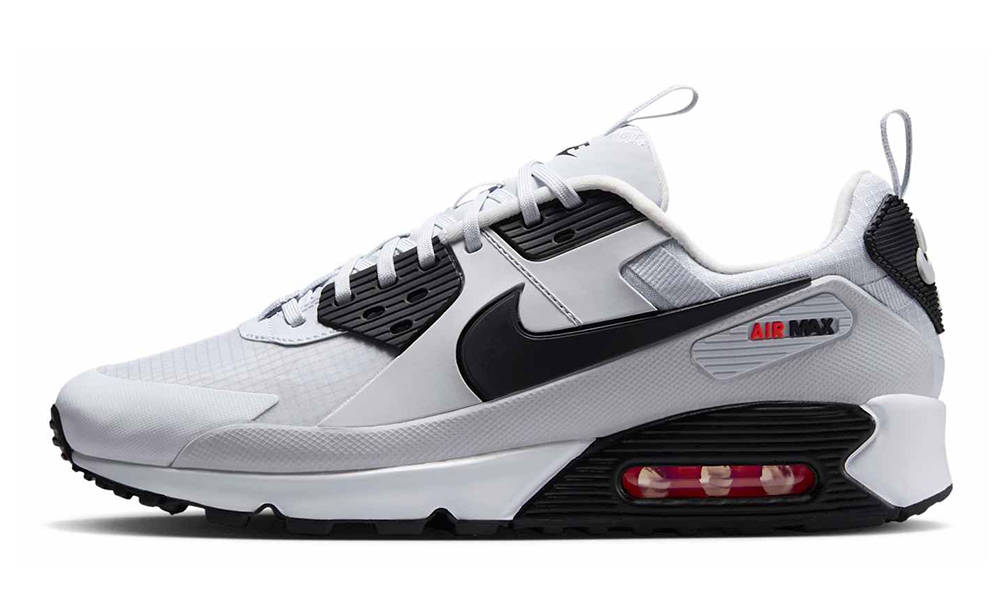

From Personalisation to Representation
Eventually, Nike switched from city-inspired editions and handed the Air Max 90 back to UK creatives, the people breathing life into the cities themselves.
One such creative artist was Dave White, an expressionist painter from Liverpool who had gained Nike’s attention through his sneaker pop-art movement. Having impressed the Swoosh, the result was a triple project between himself, Nike and size? in 2005, where White designed an “OG Neon”-inspired version of the Air Max 90. Using the 90 as the canvas to portray his love for the “Neon” 110, another UK footwear icon. White effectively broke one of Nike's most recognisable colour schemes free from its original silhouette, using the Air Max 90 to reinterpret another UK footwear icon.
REAL PEOPLE DO REAL THINGS.

via @footpatrol

Happy Mondays via alamy
Fourteen years on, the Swoosh teamed up with internet-born streetwear community The Basement. Instead of one established artist, Nike worked with a collective of creative minds, or “REAL PEOPLE” as the campaign puts it. The Air Max 90 London with its interchangeable Swooshes, nodded to the city’s changing faces, Manchester’s black Cordura upper an ode to the 0161’s tight-knit spirit, and Glasgow’s palette was a familiar shade of overcast grey broken up by the sharp traffic-cone orange.
“REAL PEOPLE DO REAL THINGS” was written beneath all three Basement pairs, a fitting mantra for the Air Max 90's journey through the UK. What had started with individuals finding ways to make the Air Max 90 feel like theirs had evolved into entire communities making it feel like ours.

via @thebasement
No Right Way to Wear It
After 35 years of the Air Max 90 in the UK, the one thing you can be sure of is that there really is no right way to wear this shoe. The AM90 doesn’t belong to a particular subculture or scene more than it does the people. Today the Max 90 is one of Nike’s most democratic Air Max silhouettes, one that the modern streetwear heads, moshers, sneakerheads, and your average person can feel comfortable lacing up.
London’s Soho crowd are happy pairing the Air Max 90 with their baggy raw denim, streetwear heads in Manchester are matching neon-accented pairs with their hats or other accessories, while the younger end of Gen Z are reminiscing on the 2000s Grime-inspired era with baggy Air Max tracksuits and premium Italian sportswear labels like C.P. Company.
The styling might have changed, but that desire to wear the Air Max 90 on your own terms hasn't. Try boxing in the Air Max 90, and you’ll soon find someone walking past you in a pair that will totally shatter those preconceptions.
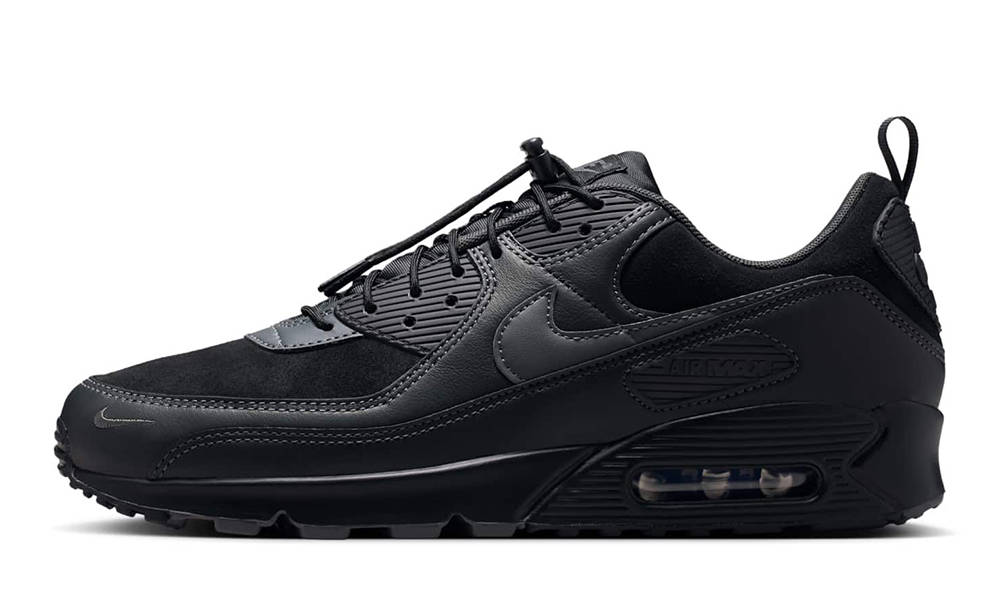
£134.99
£94.49


via @nike

via @lambojimmy

via @clint419

via @itsdatalfie

via @size_bn1_brighton

via @ibbzzz

via @damihope

via @sneakerdenn

via @steezyy_steve_
Nike’s Air Max 90 arrived in the UK as performance footwear. Sports shops advertised the shoe as one thing, but the people wearing it soon saw something entirely different. Across the UK, the spaces that the Air Max 90 entered gave the shoe a whole new meaning, each person adding their own page to the chronology of this Air Max icon.
After 35 years, the Nike Air Max 90 still hasn't found a UK uniform. Perhaps that's because it was never supposed to have one.
After 35 years, the Air Max 90 still hasn't found a UK uniform. Perhaps that's because it was never supposed to have one.


